
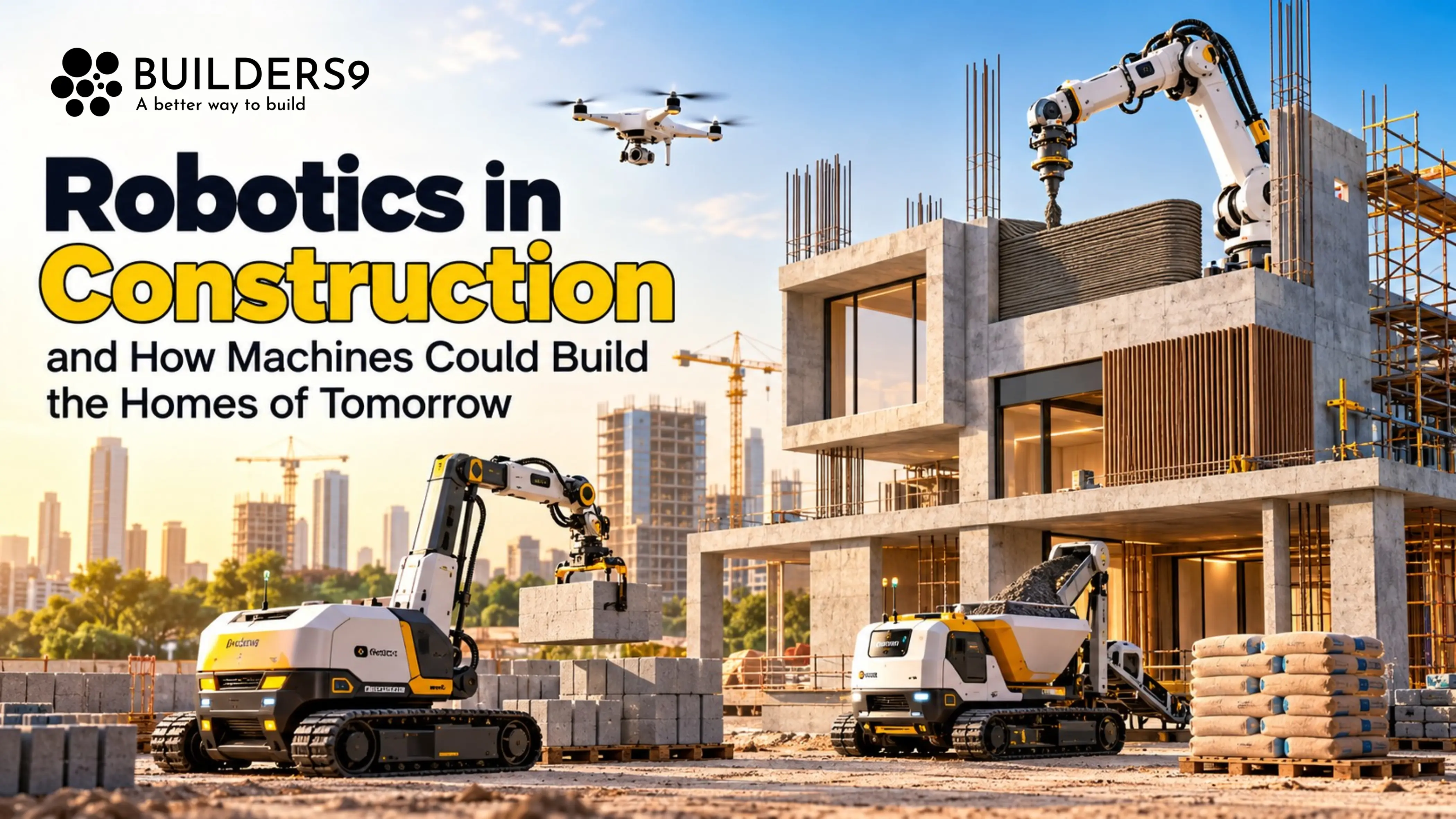
Introduction: A New Chapter in Construction
For generations, homes have been built through the skill, experience, and hard work of construction professionals. From preparing the site and laying foundations to building walls and completing finishing work, every stage requires planning and coordination. Today, technology is beginning to change how some of these tasks are carried out. Robotics in Construction is emerging as an important part of this change, helping teams explore new ways to improve precision, productivity, and safety.
Construction robots are not simply machines that replace people. They can support skilled workers, handle repetitive activities, collect site information, and assist with tasks that are physically demanding or difficult to perform consistently. Their role varies by project, and many technologies are still developing. Even so, robotics is creating new possibilities for how residential buildings, commercial spaces, and infrastructure may be designed and constructed in the years ahead.
For homeowners planning a new house, these developments are worth understanding. Technology can influence project planning, material use, progress monitoring, and quality management. Builders9 helps customers explore construction materials for their projects, and understanding emerging construction methods can help builders and homeowners make better-informed decisions.
What Does Robotics in Construction Mean?
Robotics in construction refers to programmable machines, automated equipment, and robotic systems that perform or assist with construction-related tasks. Some robots operate directly on building sites, while others work in factories where components are manufactured before being transported to a project.
These systems can include robotic arms, automated bricklaying machines, robotic layout tools, drones, autonomous or remotely operated equipment, and machines used for concrete printing. Some follow a pre-programmed path; others use cameras, sensors, positioning systems, or digital construction models to understand their location and task.
The level of automation differs significantly. A robot may complete one repetitive action while a worker supervises it, or a system may perform several linked operations in a controlled environment. People are still needed to plan the work, prepare the site, select suitable materials, check results, maintain equipment, and make decisions when conditions change.
Why Is the Industry Exploring Construction Robotics?
Construction projects often involve tight schedules, changing site conditions, coordination between trades, and demanding physical work. Repetitive tasks can be time-consuming, while small measurement or placement errors may create additional work. Robotics is being explored as one way to address some of these challenges—not as a universal solution, but as an option for tasks where automation is practical.
One potential benefit is consistency. When a machine performs a clearly defined task under suitable conditions, it may repeat movements or measurements with a high level of repeatability. Robots may also work in environments that are uncomfortable or hazardous for people, provided the equipment is designed and operated for those conditions. Digital tools can collect information about progress and help teams identify problems earlier.
However, construction sites are not always predictable. Weather, uneven ground, different material properties, limited space, and design changes can make automation difficult. A robot that performs well in a controlled factory may need significant adaptation before it can work effectively on an open site. The sensible approach is to match technology to the task rather than assume every process should be automated.
Types of Robots and Automation Used in Construction
Robotic bricklaying systems: These systems can help place masonry units according to a digital plan. Depending on the equipment, they may assist with positioning, mortar application, or placement. Human workers remain important for site preparation, checking alignment, handling corners and openings, and responding to design variations. The value depends on project scale, setup time, wall design, and material consistency.
3D construction printers: Large-scale printers deposit suitable cement-based or other approved materials layer by layer to form selected building elements or wall sections. This approach may reduce the need for conventional formwork in some applications and support complex shapes. It does not automatically complete an entire home. Foundations, reinforcement where required, roofing, services, windows, doors, waterproofing, finishes, inspections, and approvals still need careful planning.
Robotic arms and prefabrication: In factories, robotic arms can assist with cutting, welding, drilling, assembly, and handling components. Factory production offers a more controlled environment than an outdoor site. Combined with prefabrication, it may help produce repeatable building components that are transported for installation. Accurate design coordination and transport planning are essential.
Drones and aerial robotics: Drones can capture images and site data for progress monitoring, surveying support, roof inspections, and documentation. Depending on the workflow, data may be used to create maps or 3D representations. Flights must comply with applicable rules, permissions, privacy requirements, and safety procedures. A drone does not replace professional surveying or engineering checks where those are required.
Autonomous and remotely operated equipment: Selected machines use sensors, positioning technology, and automated controls to support earthmoving, hauling, grading, or site logistics. Some systems operate autonomously in limited conditions, while others assist an operator. Clear work zones, trained supervision, maintenance, and reliable site data are essential.
Robotic inspection and layout tools: Some systems can mark locations, scan surfaces, inspect hard-to-reach areas, or compare site conditions with a digital model. By helping teams detect discrepancies early, these tools may reduce rework. Findings still need to be interpreted by competent professionals, especially when they affect structural safety or compliance.
How Robotics Could Change Homebuilding
Planning and design: Digital models can coordinate architectural, structural, and building-services information before work begins. If robotic equipment will be used, designs may need to be prepared in a compatible format and account for the machine’s working limits. Better coordination before construction can reduce avoidable changes.
Site preparation: Surveying tools, drones, and selected automated machines may help teams understand site conditions and track earthworks. Actual preparation still depends on soil, drainage, access, local regulations, and professional assessment.
Structure and walls: Robotic layout tools, automated equipment, prefabricated components, or 3D printing may support particular wall-building activities. The appropriate approach depends on the approved design, materials, climate, workmanship requirements, and local building standards.
Services and finishing: Robotics may assist with repetitive cutting, drilling, inspection, or component handling. Plumbing, electrical installation, waterproofing, painting, cabinetry, and other finishing tasks often involve detailed judgment and coordination. Human expertise remains essential to deliver a comfortable and functional home.
Handover and maintenance: Digital records, inspection images, and sensor data can help document what was built and identify maintenance needs. Accurate, accessible records may be useful to homeowners after they move in.
Potential Benefits of Construction Robotics
Improved repeatability: Robots can repeat defined movements and measurements, potentially helping achieve consistency when systems are calibrated and used in suitable conditions.
Support for worker safety: Robots, drones, and remote systems may reduce the need for people to enter some hazardous or hard-to-access areas. They do not eliminate risk; safe procedures, exclusion zones, training, and human oversight remain necessary.
Productivity on suitable tasks: Automation can help with repetitive operations and may allow workers to focus on more complex activities. Overall time savings depend on setup, site readiness, maintenance, material supply, and the amount of work involved.
Potential reduction in rework and waste: Accurate layout, digital coordination, and repeatable placement may prevent some errors. Waste reduction is not guaranteed and depends on planning, system performance, material handling, and quality checks.
Better site visibility: Drones and digital monitoring tools can document progress and help teams communicate site conditions. Timely information supports decisions, but data must still be verified and acted upon.
New skilled roles: Wider use of robotics may increase demand for people who operate equipment, maintain systems, manage digital models, interpret data, and coordinate automated workflows. Training and adaptation will be important.
Challenges and Limitations to Consider
High initial investment: Robotic systems may require substantial spending on equipment, software, integration, transport, maintenance, and training. For small or one-off residential projects, these costs may outweigh the benefits. Contractors should assess total cost of ownership rather than only the purchase price.
Unpredictable site conditions: Construction sites can include uneven surfaces, dust, heat, rain, restricted access, and frequent changes. Equipment must be suitable for the environment and task. Some robots work better in factories or prepared work zones than on complex sites.
Skills and training: Workers and supervisors need training to use, inspect, and maintain robotic equipment. Teams must understand the machine’s limits, how to respond to faults, and when work should stop for safety reasons.
Integration with existing methods: A project may combine traditional work, prefabrication, and automation. Coordinating these methods can require compatible data, clear responsibilities, and changes to established workflows.
Regulations and accountability: Buildings must comply with applicable codes, approvals, inspections, and safety rules regardless of technology. Project owners and professionals should establish who is responsible for design, operation, quality checks, and final acceptance.
Not every task benefits from automation: Unique architectural details, small spaces, changing site conditions, and projects with limited repetition may be better served by conventional methods or a mix of manual and automated work. Technology should solve a real problem, not be adopted simply because it is new.
Will Robots Replace Construction Workers?
The more realistic near-term picture is collaboration rather than complete replacement. Construction depends on judgment, problem-solving, coordination, craftsmanship, communication, and responsibility. Robots can assist with selected physical tasks, but they do not independently manage every aspect of a building project.
A machine may place repeated units, scan a surface, or transport materials, while people prepare the work area, verify dimensions, resolve unexpected conditions, supervise safety, and check quality. As equipment becomes more capable, job roles may evolve. Workers may need to learn new digital and technical skills, while employers may need to invest in training and thoughtful change management.
The goal should be to use automation where it improves safety, quality, or efficiency while respecting the value of experienced construction professionals. Successful adoption depends as much on the people, planning, and processes around the technology as on the machine itself.
What Does Robotics Mean for Construction Materials?
Even with advanced robotics, the materials used in a project remain fundamental. Cement, TMT steel, bricks, blocks, sand, aggregates, tiles, and other products must suit the intended application and comply with project specifications. A robot cannot compensate for material that is unsuitable, damaged, incorrectly stored, or used outside its approved purpose.
Automated systems can be sensitive to product dimensions, consistency, packaging, moisture, and handling requirements. For example, a masonry system needs compatible units and a suitable workflow; a concrete-printing system requires material specifically formulated and tested for the equipment and intended application. Conventional cement or concrete mixes should not be assumed suitable for 3D printing without technical confirmation.
Planning material quantities and delivery schedules remains important. Materials should arrive in the correct quantities and at the right stage, with sufficient space for safe storage and access. Where a project uses prefabricated or robotic systems, the contractor should confirm specifications and logistics with the technology provider, engineer, and supplier before ordering.
Builders9 helps customers explore construction materials for building projects. Homeowners and contractors can prepare their material list, confirm specifications with their engineer or contractor, and contact Builders9 to discuss their requirements. Good planning, suitable materials, and competent workmanship remain central to a successful project.
How Builders and Homeowners Can Prepare
Start with project requirements: Define the building’s purpose, design, budget, site conditions, timeline, and quality expectations before selecting construction methods.
Ask practical questions: If a contractor proposes robotic equipment, ask which task it will perform, what preparation is required, how quality will be checked, and what happens if the system fails or conditions change.
Compare the full cost: Include setup, transport, operator training, software, maintenance, consumables, and any changes needed to the design or site. Compare these costs with expected benefits for the specific project.
Keep professional oversight: Structural design, material specifications, electrical and plumbing work, fire safety, waterproofing, and statutory approvals should be handled and checked by appropriately qualified professionals.
Plan materials and deliveries: Create a staged list of required products and confirm quantities and specifications with the project team. Good coordination can help avoid shortages, excessive storage, and unnecessary damage.
Stay open to suitable innovation: Not every home needs a robot on site. Sometimes digital planning, better scheduling, prefabricated components, or improved site monitoring can offer practical advantages without a major investment in automation.
What Could the Future Homebuilding Site Look Like?
Future construction sites may combine skilled workers, digital design models, sensors, drones, automated equipment, and factory-made components. A project manager could use digital records to compare planned and actual progress, while specialised machines perform selected repetitive tasks. Materials may be delivered according to a carefully coordinated schedule, and inspections may draw on photographs, scans, and digital checklists.
More advanced systems may eventually connect design, manufacturing, logistics, and on-site assembly more closely. This could make some processes more predictable, particularly for projects with repeated designs or components. However, homes are built in different climates, on different soils, under different regulations, and for different budgets. One automated approach will not suit every location or family.
The future is therefore unlikely to be a construction site without people. It is more likely to be a site where people and technology work together, with automation handling appropriate tasks and professionals retaining responsibility for planning, decisions, safety, and quality.
Conclusion: Building Tomorrow Requires Smart Choices Today
Robotics in Construction is opening up new ways to approach selected building tasks, from bricklaying support and 3D printing to inspection, prefabrication, and site monitoring. These technologies can offer benefits in the right circumstances, but they also bring costs, training needs, technical limits, and safety responsibilities. Their value must be assessed against the needs of each project rather than assumed in advance.
For homeowners and builders, the essentials remain familiar: a sound design, suitable materials, realistic budgeting, professional supervision, and organised execution. New technology can support these fundamentals, but it cannot replace them. As construction methods continue to evolve, informed decisions will help people make the most of useful innovations while protecting building quality and safety.