
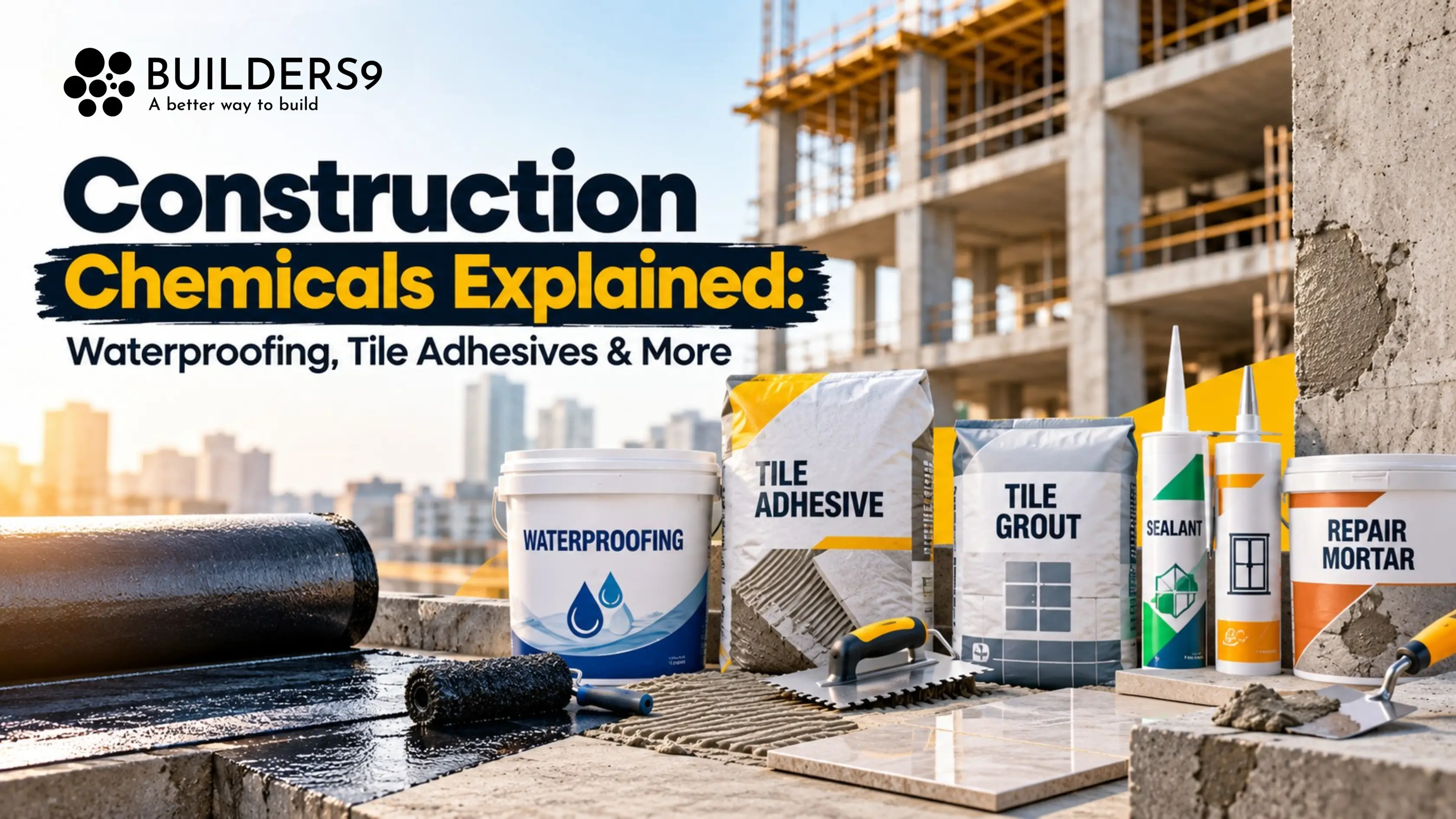
Construction is about more than cement, steel, bricks and concrete. The products used to protect, bond, seal and finish these materials also play an important role in a building’s performance. Construction chemicals are designed to improve specific properties of building materials when selected and applied correctly.
From waterproofing a terrace to fixing tiles or repairing a surface, the right product can help address a particular construction need. No single chemical is suitable for every situation. The correct choice depends on the surface, location, exposure conditions, substrate preparation and the manufacturer’s instructions.
What Are Construction Chemicals?
Construction chemicals are specialised products used during construction, renovation and maintenance to improve the performance or durability of building components. They may help control water penetration, improve adhesion, fill joints, protect surfaces, modify concrete properties or support repairs.
They are used in foundations, bathrooms, balconies, terraces, water tanks, tiled floors, walls, concrete surfaces and exposed building exteriors. Each product has a defined purpose, so match it to the application rather than choosing only by price or brand.
1. Waterproofing Chemicals: Help Keep Water Out
Water can enter a building through cracks, porous surfaces, poorly sealed joints or areas where water collects. Moisture may contribute to damp patches, peeling paint, corrosion of embedded steel or deterioration of materials. Waterproofing systems are designed to reduce water penetration in specific locations.
Common waterproofing applications
- Bathrooms and wet areas: Waterproofing beneath final floor and wall finishes can help protect adjoining rooms and building components.
- Terraces and balconies: The system should suit outdoor exposure, temperature changes, drainage and the final finish.
- Foundations and basements: Selection depends on soil moisture, groundwater pressure, drainage and structural design.
- Water tanks: Use only products specifically approved for the intended water-contact application.
Types of waterproofing products
- Cementitious coatings: Cement-based systems used on suitable concrete or masonry surfaces, including selected wet areas.
- Liquid-applied membranes: Applied as a liquid and cured into a continuous membrane; suitability depends on product and exposure.
- Bituminous systems: Used in certain below-ground and other specified applications, subject to design and compatibility.
- Crack and joint sealants: Used for selected joints or cracks; they do not replace a complete waterproofing system where one is required.
Waterproofing performance depends on more than the product. Surface preparation, corner and pipe-junction detailing, correct thickness, curing or drying time, drainage and any required ponding test are important. Follow the system instructions and seek qualified help for complex or persistent leakage.
2. Tile Adhesives: A Suitable Bond Between Tile and Surface
Tile adhesive is formulated to bond tiles to a prepared substrate. Compared with a traditional cement-and-sand bedding mix, a suitable adhesive offers controlled application and may be formulated for different tile types and service conditions. The right adhesive depends on tile size, weight, porosity, substrate and whether installation is indoors, outdoors or in a wet area.
What to check before choosing tile adhesive
- Tile type and size: Large-format, low-porosity or heavy tiles may require a specified adhesive class.
- Substrate: Concrete, cement plaster, existing tiles and other surfaces may need different preparation or products.
- Location: Bathrooms, balconies, swimming pools and exterior areas have different exposure requirements.
- Application instructions: Follow the specified mixing ratio, open time, bed thickness, coverage and curing time.
Do not assume one adhesive suits every tile and surface. For natural stone, large-format tiles or demanding installations, confirm compatibility with the tile supplier and adhesive manufacturer.
3. Grouts and Joint-Filling Products
Grout fills the joints between installed tiles and helps create a finished appearance. Ordinary tile grout should not be treated as the primary waterproofing layer. The waterproofing system, movement joints and sealant details beneath and around the tiles remain important.
Cement-based grouts are common for many installations, while epoxy grouts may be appropriate where greater stain or chemical resistance is required. Choose according to joint width, tile type, cleaning needs and environment. Flexible sealants are used at selected movement joints, corners or changes of plane where the specified system calls for them.
4. Concrete Admixtures and Plasticisers
Concrete admixtures are added to concrete or mortar in controlled quantities to modify particular properties. Depending on the product, they may improve workability, help reduce the water needed for a target consistency, control setting time or support other performance requirements.
Plasticisers and superplasticisers are commonly used to improve workability or help achieve a required flow with controlled water content. Other admixtures may be used for specific conditions, such as setting-time control. The right admixture must be compatible with cementitious materials and the concrete mix design.
Never dose admixtures by guesswork. Incorrect quantities or incompatible combinations can affect setting, strength, durability or finishing. Follow the technical datasheet and guidance from the concrete supplier or qualified engineer.
5. Repair Mortars, Crack Fillers and Protective Coatings
Buildings may need repairs because of cracking, damaged concrete, surface defects or exposure to moisture and weather. Identifying the cause of the defect is essential before selecting a solution.
- Repair mortars: Used for suitable localised repairs to concrete or masonry after the damaged area is assessed and prepared.
- Crack fillers and sealants: Suitable for certain crack types and joints; the product must match crack movement and substrate conditions.
- Protective coatings: May help protect suitable surfaces against weathering, moisture or specific chemical exposure.
- Bonding agents: Used in specified applications to improve the bond between compatible materials or repair material and an existing substrate.
A crack may be cosmetic, caused by shrinkage, related to movement or a sign of a structural issue. If it widens, recurs or appears in a structural member, seek assessment from a qualified engineer rather than simply covering it.
6. Sealants: Protecting Joints and Gaps
Sealants close selected gaps and joints around windows, doors, sanitary fixtures, façades and other building elements. Different sealants offer different levels of flexibility, weather resistance, adhesion and compatibility. Choose according to joint design, expected movement, exposure and materials being joined.
Good results require clean, prepared joint surfaces and the correct joint dimensions. Backing material or primer may be required in some applications. Check whether the sealant suits exterior exposure, wet areas and the specific substrate.
7. How to Choose the Right Construction Chemical
- Identify the application. Decide whether the requirement is waterproofing, tile fixing, joint sealing, concrete modification or repair.
- Check the substrate and site conditions. Consider surface material, moisture, temperature, movement, exposure and indoor or outdoor location.
- Read the technical datasheet. Review approved uses, preparation, mixing, application thickness, coverage, curing time and limitations.
- Check compatibility. Confirm the product works with the tile, concrete, coating, membrane or other materials in the proposed system.
- Prepare the surface. Remove dust, loose material, oil and contaminants as directed. Repair defects and use primers where specified.
- Use trained applicators where needed. Complex waterproofing, structural repairs and demanding installations may need an experienced contractor or technical support.
- Follow safety instructions. Use recommended protective equipment and follow storage, handling and disposal directions on the label.
- Consider the full system cost. Compare preparation, accessories, labour, maintenance and expected performance—not just the price per container.
Common Mistakes to Avoid
- Choosing a product only because it is inexpensive or widely available.
- Applying waterproofing over a dirty, weak or unsuitable surface.
- Treating grout or a surface coating as a substitute for a correctly designed waterproofing system.
- Using tile adhesive without checking tile size, substrate and exposure.
- Adding extra water or changing the mixing ratio beyond the manufacturer’s instructions.
- Ignoring curing times, movement joints, coverage requirements or safety precautions.
- Covering a recurring crack or leak without investigating the underlying cause.
Why Quality Materials and Correct Application Matter
Construction chemicals work best as part of a suitable system, alongside good design, sound construction practices and proper workmanship. A high-quality product cannot compensate for incorrect surface preparation or an unsuitable application. Selecting the right product and following its instructions can help reduce avoidable failures, rework and maintenance issues.
Before purchasing, list the application area, surface type, site conditions and expected finish. Share these details with a knowledgeable supplier or the product manufacturer so the recommendation can be checked against technical requirements.
A Practical Checklist Before You Purchase
What problem am I trying to solve, and where will the product be used?
What is the substrate made of, and is it clean, sound and properly prepared?
Will the area be exposed to rain, standing water, movement, heat or cleaning chemicals?
Does the product datasheet specifically cover this application and surface?
Are primers, reinforcement, joint accessories or other system components required?
How much material is needed based on the stated coverage and actual site area?
What are the required mixing, application, drying and curing times?
Who will apply the product, and do they understand the recommended method?
Are storage, safety and compatibility instructions clear before the work begins?
Using this checklist can help the project team ask better questions and reduce the risk of selecting a product that does not match the job. For structural defects, persistent leakage or unusual site conditions, a qualified engineer or technical specialist should assess the situation before a repair system is chosen.
Conclusion
Construction chemicals play a useful role in protecting buildings, fixing tiles, sealing joints, modifying concrete and carrying out repairs. Waterproofing products help manage water penetration, tile adhesives create a suitable bond, grouts fill tile joints, admixtures modify concrete properties, and repair products address specific defects. Each category has different formulations and limitations.The best choice is the product that matches the application and is installed according to its technical instructions. Plan carefully, confirm compatibility and seek professional advice where project conditions are complex.