
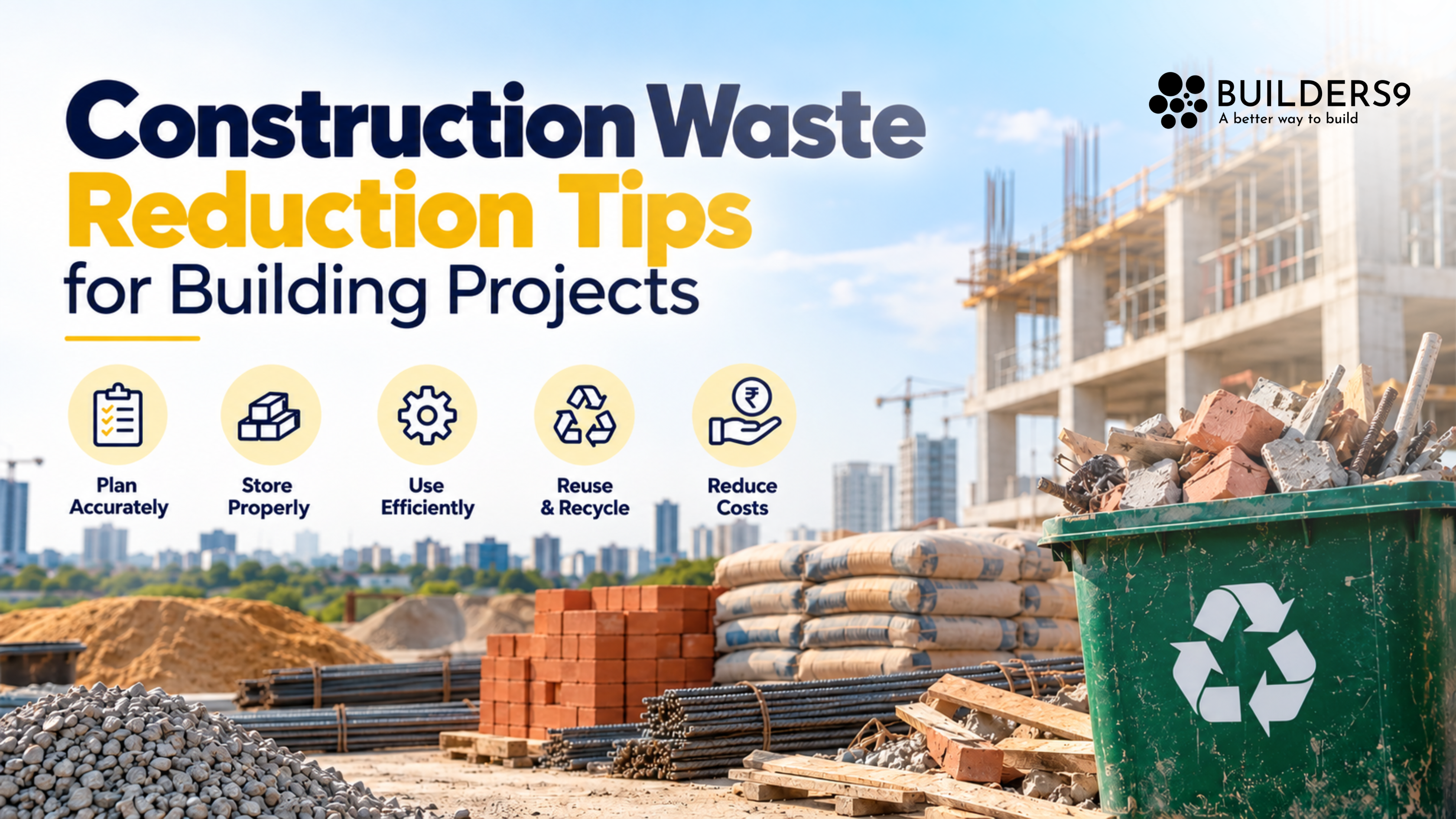
Construction Waste is a common challenge in residential and commercial building projects. From excess cement and damaged bricks to unused steel, wasted sand, broken tiles, and leftover concrete, material losses can increase project costs and make construction management more difficult.
Many construction projects focus heavily on purchasing materials at competitive prices, but controlling how those materials are estimated, transported, stored, and used is equally important. Even small amounts of wastage across multiple construction stages can add up to a significant expense.
The good news is that most avoidable construction waste can be reduced through proper planning, accurate quantity estimation, careful handling, organized storage, and responsible reuse of suitable leftover materials.
Whether you are building a new home, managing a construction site, or supervising a commercial project, understanding the causes of material waste can help you use resources more efficiently.
In this guide, we will explore the common causes of construction waste, practical ways to reduce it, material-specific prevention methods, and how better construction planning can help control unnecessary expenses.
What Is Construction Waste?
Construction waste refers to materials that are discarded, damaged, left unused, or generated as excess during construction, renovation, or demolition activities. It can include physical waste and materials purchased in quantities that exceed actual project requirements.
Common examples include:
- Cement that hardens because of moisture or prolonged storage.
- Bricks and AAC blocks broken during unloading or masonry work.
- Steel bars left over because of inaccurate cutting or poor quantity planning.
- Sand and aggregates lost through improper storage or site handling.
- Concrete left unused after a pour.
- Tiles damaged during cutting, transportation, or installation.
- Packaging materials, timber offcuts, and discarded construction debris.
Not all leftover material is necessarily waste. Some materials can be reused in appropriate applications, returned to suppliers where permitted, or sent for recycling. The key is to prevent unnecessary waste before it occurs and manage unavoidable waste responsibly.
Why Reducing Construction Waste Matters
1. Helps Control Construction Costs
Every material that is damaged, lost, or purchased unnecessarily represents money that could have been used elsewhere in the project. Reducing waste helps homeowners and contractors make better use of their construction budgets.
2. Improves Material Utilization
Accurate estimates and planned material usage help ensure that purchased cement, steel, blocks, sand, and other supplies are used for their intended purposes.
3. Reduces Unnecessary Purchases
When materials are tracked properly, project managers can identify available stock before placing new orders. This helps avoid duplicate purchases and excessive inventory.
4. Keeps the Construction Site Organized
Proper storage and waste segregation help reduce clutter, prevent damage, and make materials easier to access when needed.
5. Supports Environmental Responsibility
Manufacturing and transporting construction materials require resources and energy. Preventing unnecessary waste and reusing or recycling suitable materials can reduce the environmental impact of building projects.
6. Supports Better Work Planning
When materials are measured, stored, and issued systematically, workers spend less time searching for supplies or correcting avoidable mistakes. This can help construction activities run more efficiently.
Common Causes of Construction Waste
1. Inaccurate Material Estimation
One of the most common causes of material waste is ordering quantities without accurate calculations. If the estimated requirement is too high, excess materials may remain unused or deteriorate before they can be used. Underestimating quantities can also cause additional orders, unnecessary transport, mismatched batches, or rushed purchasing decisions.
How to prevent it: Use construction drawings, measurements, structural specifications, and a stage-wise material estimate. Have a qualified engineer or estimator review the quantities before placing major orders.
2. Improper Storage
Materials can become unusable when stored incorrectly. Cement can absorb moisture, steel can develop corrosion under unsuitable storage conditions, and bricks or tiles can break when stacked carelessly. Sand and aggregates may become contaminated when placed directly on muddy ground or mixed with other materials.
How to prevent it: Assign designated storage areas, protect materials from weather exposure where necessary, and follow the supplier’s storage instructions.
3. Poor Material Handling
Rough unloading, careless movement, and improper stacking can damage materials before they reach the actual work area. Dropping blocks may cause breakage, while careless movement of tiles can result in chipped edges and cracks.
How to prevent it: Train workers in safe handling practices, use suitable equipment for heavy materials, and minimize unnecessary movement between storage and work areas.
4. Incorrect Cutting and Installation
Steel bars, tiles, pipes, plywood, and timber often require cutting to specific dimensions. Poor measurements or a lack of cutting plans can create unusable offcuts. Incorrect installation can also result in damaged materials that must be replaced.
How to prevent it: Measure carefully, mark dimensions before cutting, prepare cutting plans for repetitive work, and verify measurements before installation.
5. Poor Coordination Between Construction Stages
Ordering materials too early can lead to prolonged storage, while ordering too late may interrupt work. Changes in the construction sequence can also leave previously purchased materials unused.
How to prevent it: Coordinate procurement with the construction schedule. Estimate what is needed for each stage and review requirements before placing orders.
6. Frequent Design Changes
Changes to room layouts, dimensions, electrical points, plumbing routes, or finishing choices after work has started can make previously purchased materials unsuitable. Changing a tile design after installation begins, for example, may leave unused tiles that cannot easily be matched later.
How to prevent it: Finalize important drawings, material specifications, and finishing selections before ordering large quantities whenever practical.
10 Practical Ways to Reduce Construction Waste
1. Prepare a Detailed Material Estimate
Calculate expected quantities of cement, steel, sand, aggregates, bricks, blocks, tiles, and other materials before purchasing. Base estimates on project drawings and specifications rather than rough assumptions.
2. Store Materials Correctly
Keep cement dry, steel properly supported and protected as appropriate, and bricks and blocks on stable ground. Follow manufacturer recommendations and avoid storage conditions that may contaminate or damage materials.
3. Plan Cutting and Sizing
Prepare cutting schedules for reinforcement steel, tiles, pipes, and other materials. Check dimensions before cutting and use offcuts only where suitable and compliant with specifications.
4. Order Materials in Planned Quantities
Coordinate deliveries with the construction schedule and available storage capacity. Avoid ordering large quantities too far in advance when materials are vulnerable to damage or deterioration.
5. Maintain Inventory Records
Track incoming materials, quantities issued to workers, available stock, and unused materials. Simple spreadsheets or inventory registers can help identify excess stock before new orders are placed.
6. Train Workers in Material-Saving Techniques
Proper mixing, handling, cutting, and installation practices help prevent avoidable damage. Explain the correct procedures for each material before work begins.
7. Check Work Before It Is Completed
Inspect measurements, reinforcement placement, formwork, and installation work at appropriate stages. Finding mistakes early can prevent larger amounts of material from being wasted during rework.
8. Segregate Waste at the Site
Keep metal, clean rubble, timber, packaging, and general waste in separate designated areas. Segregation makes it easier to identify materials that may be reused or recycled through appropriate channels.
9. Reuse Suitable Leftover Materials
Reuse materials only when they remain fit for the intended application and meet project specifications. Suitable timber formwork, selected offcuts, and approved clean rubble may have further uses depending on the design and applicable requirements.
10. Review Waste Regularly
Record the materials being wasted, where the loss occurs, and the reason behind it. Reviewing these records weekly helps teams identify recurring problems and improve their working methods.
How to Reduce Waste in Different Construction Materials
Cement
- Store bags in a dry, covered area.
- Keep bags off the floor using suitable pallets or platforms.
- Protect cement from damp walls and rainwater.
- Follow the manufacturer’s storage and shelf-life recommendations.
- Purchase quantities that can be used within an appropriate period.
- Prepare concrete and mortar mixes according to approved specifications.
Avoid using cement that has hardened or deteriorated because of moisture exposure without appropriate technical assessment.
TMT Steel
- Use reinforcement drawings and approved bar-bending schedules.
- Verify bar dimensions before cutting.
- Plan cutting sequences to reduce unusable offcuts.
- Store bars in an organized manner to make identification easier.
- Protect steel from contamination and conditions that can accelerate corrosion.
- Reuse offcuts only when permitted by the structural design and applicable specifications.
Steel reinforcement should never be shortened, substituted, or reused in a way that compromises structural requirements.
Sand and Aggregates
- Store them on suitable surfaces.
- Use designated stockpile areas.
- Prevent mixing with soil, debris, or other unwanted materials.
- Minimize repeated movement between storage and mixing locations.
- Use suitable measuring methods for batching.
- Protect stockpiles where practical from runoff and contamination.
These practices help maintain material consistency and reduce losses during concrete and mortar preparation.
Bricks and AAC Blocks
- Unload materials carefully.
- Stack them on stable, suitable ground.
- Avoid excessive stacking heights or unstable arrangements.
- Move blocks closer to the work area without repeated handling.
- Measure walls and openings carefully before cutting blocks.
- Follow the manufacturer’s recommendations for cutting, jointing, and installation.
Storage and handling procedures may differ between traditional clay bricks and AAC blocks.
Tiles
- Finalize tile dimensions and layout before ordering.
- Check room measurements, corners, openings, and installation patterns.
- Inspect tiles for visible damage upon delivery.
- Handle boxes carefully and store them according to manufacturer instructions.
- Keep suitable spare tiles for future repairs.
- Avoid using damaged tiles where their condition affects safety or finished quality.
The required extra quantity depends on tile size, room layout, installation pattern, and expected cutting losses.
Concrete
- Calculate concrete volumes carefully.
- Check formwork and reinforcement before pouring.
- Coordinate concrete delivery with site readiness.
- Ensure the required workforce and equipment are available.
- Follow approved mix designs and placement procedures.
- Dispose of surplus concrete through appropriate approved methods.
Never add excess water or reuse concrete that has begun setting to avoid wastage. Concrete quality and structural requirements must remain the priority.
How Material Planning Helps Reduce Construction Costs
Material planning connects purchasing, storage, site activities, and budget control. For example, imagine a residential project that requires cement for several stages. If the entire estimated quantity is ordered immediately, some bags may remain in storage longer than necessary. If purchasing is coordinated with the construction schedule and suitable storage capacity, the project team can better control inventory and reduce the risk of deterioration.
The same principle applies to steel, blocks, tiles, plumbing supplies, and finishing materials.
A practical planning process includes:
- Estimate: Determine quantities using drawings, specifications, and measurements.
- Schedule: Identify when each material will be required.
- Purchase: Order suitable quantities from appropriate suppliers.
- Inspect: Check delivered materials for quantity, damage, and specifications.
- Store: Keep materials protected and organized.
- Issue: Track materials supplied to each work area.
- Review: Compare estimated consumption with actual usage.
This process helps identify unusual consumption, unexpected breakage, and surplus stock before the problem becomes expensive.
How to Calculate and Track Construction Waste
You do not need complicated software to start monitoring material wastage. A basic register can provide useful insights. One simple method is to compare the amount of material issued for work with the amount estimated to be required for the completed work.
For materials that can be measured on a consistent basis:
Wastage Rate (%) = (Material Wasted ÷ Total Material Issued) × 100
For example, suppose 100 tiles are issued for installation and 5 are damaged or become unusable. The wastage rate is (5 ÷ 100) × 100 = 5%.
This is an illustrative calculation, not a recommended allowance for every project. Appropriate benchmarks vary by material, installation method, design complexity, and site conditions.
For cement, steel, and bulk materials, use consistent units and clearly distinguish actual waste from approved material incorporated into the work, reusable offcuts, and unused stock.
A simple tracking sheet can include:
| Material | Quantity issued | Waste or damage | Reason |
| Tiles | 100 pieces | 5 pieces | Cutting and breakage |
| Steel | 500 kg | 10 kg | Cutting offcuts |
| Bricks | 1,000 pieces | 20 pieces | Handling damage |
Illustrative figures only; actual wastage should be measured on the project. Reviewing these records helps construction teams focus on the materials and activities that contribute most to avoidable losses.
Common Mistakes to Avoid When Managing Construction Waste
- Ordering based only on rough estimates: Use proper measurements and project specifications.
- Buying large quantities only to secure a price: Consider storage conditions, actual demand, and the risk of deterioration.
- Ignoring delivery inspections: Check materials when they arrive and report discrepancies promptly.
- Mixing different waste materials: Segregation makes reuse and recycling easier.
- Changing specifications after purchasing: Finalize important material selections before placing large orders where possible.
- Reusing unsuitable materials: Reuse should never compromise structural performance, safety, or quality.
- Ignoring small losses: Repeated minor losses can add up over the duration of a project.
- Failing to review consumption: Compare actual usage with estimates to identify recurring problems.
Reducing waste should never mean compromising material quality or skipping essential construction requirements. The goal is to use the right materials efficiently, not to cut corners.
How Builders9 Can Support Better Material Planning
Efficient construction begins with understanding what a project needs and organizing material purchases accordingly.
Builders9 supplies construction materials for residential and commercial projects across Hyderabad. Having a clearer view of material requirements before purchasing can help customers plan orders, consider suitable product options, and coordinate supply with their construction stages.
Builders9 offers construction materials across categories such as cement, TMT steel, bricks, AAC blocks, sand, aggregates, tiles, and other building requirements.
To make material purchasing more organized:
- Prepare a material list based on your project requirements.
- Confirm quantities and specifications with your engineer or contractor.
- Check availability and delivery arrangements before ordering.
- Plan suitable storage space for incoming materials.
- Coordinate orders with your construction schedule to avoid unnecessary stock accumulation.
Builders9 provides construction material delivery across Hyderabad within 12 hours, subject to product availability, order confirmation, and delivery arrangements.
Contact Builders9
Phone: +91 73967 77235
Website: www.builders9.com
Frequently Asked Questions
1. What is construction waste?
Construction waste includes materials discarded, damaged, left unused, or generated in excess during construction, renovation, and demolition. Examples include broken bricks, unused concrete, damaged tiles, steel offcuts, and deteriorated cement.
2. What are the main causes of construction waste?
The main causes include inaccurate material estimates, poor storage, careless handling, incorrect cutting, design changes, poor coordination, and inadequate inventory management.
3. How can construction waste be reduced?
Construction waste can be reduced through accurate quantity estimation, planned purchasing, suitable storage, careful handling, worker training, material tracking, and responsible reuse or recycling of suitable materials.
4. Which construction materials are commonly wasted?
Cement, steel, bricks, AAC blocks, sand, aggregates, concrete, tiles, timber, and plumbing materials can all be wasted when purchasing, handling, storage, or installation is not properly managed.
5. How does construction waste increase project costs?
Wasted materials represent lost purchasing value. They may also create additional costs for replacement purchases, transport, handling, cleanup, and disposal.
6. Can leftover construction materials be reused?
Yes, when the material is in suitable condition and its reuse complies with project specifications and safety requirements. Reuse options depend on the material and its intended application.
7. How can homeowners reduce construction waste when building a house?
Homeowners can work with qualified engineers and contractors to prepare accurate estimates, finalize design choices early, inspect deliveries, store materials properly, and monitor material consumption throughout construction.
8. Does ordering materials in stages help reduce waste?
It can. Stage-wise ordering helps align deliveries with actual requirements and available storage. However, order timing should also account for supplier availability, delivery costs, and the construction schedule.
Conclusion
Construction Waste reduction is an important part of managing a building project efficiently. Accurate estimates, careful storage, planned purchasing, proper handling, and regular inventory checks can help prevent avoidable material losses.
From cement and TMT steel to bricks, AAC blocks, sand, aggregates, and tiles, every material should be selected, stored, and used according to project requirements.
By tracking consumption, preventing damage, and reusing suitable materials responsibly, homeowners and contractors can make better use of their construction budgets without compromising quality or safety.Plan your material requirements carefully, purchase according to your project needs, and work toward a more efficient construction process with Builders9.