
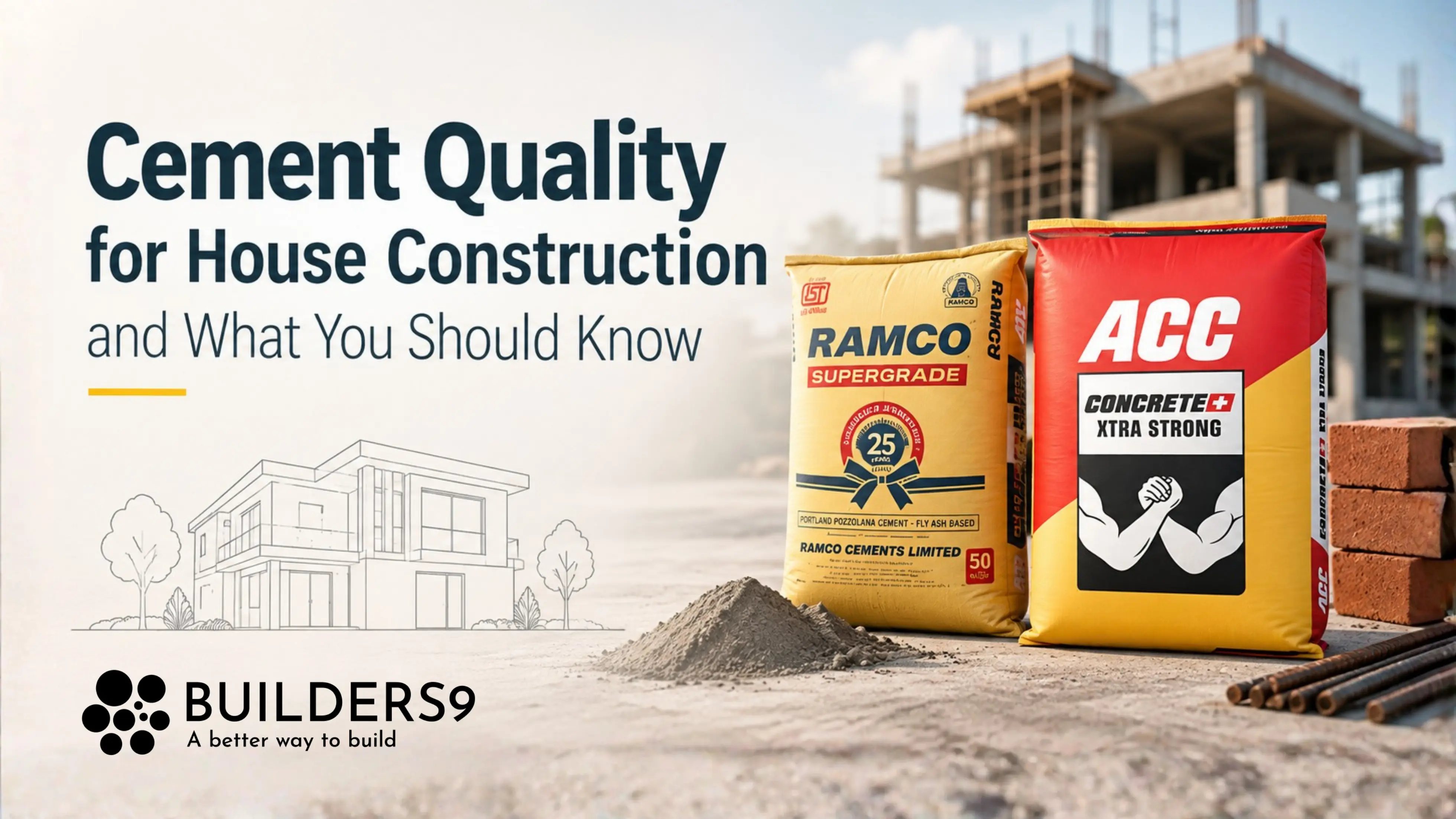
Cement Quality is one of the most important factors to consider when building a house, as it directly influences the strength, durability, and overall performance of the structure. Cement is widely used in concrete, mortar, masonry, plastering, and other construction applications, making the right selection important from the foundation stage to finishing work.
Choosing cement only based on price may not always be the right approach. The type, freshness, storage condition, consistency, and suitability of cement for the intended application should all be considered before making a purchase.
Why Cement Quality Matters in House Construction
Cement quality can influence the consistency and performance of concrete and mortar. Cement works as a binding material, bringing sand and aggregates together to form concrete and helping create strong bonds in masonry applications.
Since cement is used at different stages of construction, maintaining consistent quality from the beginning can help support better construction practices.
For homeowners, the focus should not only be on the price of a cement bag. Product suitability, manufacturer, storage condition and handling should also be considered.
What Determines Cement Quality
Several factors should be considered when evaluating cement for a construction project.
1. Cement Type
Different cement types are available for different construction requirements. The appropriate choice depends on the application and project specifications.
Before purchasing, discuss the requirement with your engineer or construction professional rather than selecting a cement type based only on general recommendations.
2. Manufacturer and Brand
Choosing cement from an established and reliable manufacturer can provide greater confidence in product consistency. Check the manufacturer’s details and product information on the cement packaging before purchasing.
3. Packaging Condition
Always inspect the cement bags before accepting them.
Properly sealed packaging
Clearly printed product details
No visible damage
No signs of moisture exposure
Appropriate manufacturing or packing information
Damaged or moisture-affected bags should be avoided.
How to Check Cement Quality Before Buying
Homeowners may not always know how to evaluate construction materials. A few basic checks can help when purchasing cement.
Check the Appearance
Cement should have a reasonably uniform appearance and should not show obvious contamination or excessive lumps caused by moisture.
Check for Moisture
Moisture can affect cement during storage. Avoid bags that show signs of water exposure, dampness or excessive hardening.
Check the Packaging
Verify the brand, cement type, grade and other information printed on the bag. Make sure the packaging is intact.
Buy From a Reliable Supplier
A dependable supplier should provide properly handled materials and clear information about the products being supplied.
Cement Storage Matters Too
Even good-quality cement can be affected by poor storage conditions. Cement should be stored in a dry, covered and moisture-free area. Bags should be protected from rain, ground moisture and water exposure.
Best Practices for Cement Storage
Keep cement in a dry storage area.
Protect bags from rain and moisture.
Avoid direct contact with the ground.
Keep the storage area properly covered.
Follow a suitable stock rotation system.
Avoid keeping cement exposed at the construction site for unnecessary periods.
Proper storage helps maintain the intended condition of the cement until it is used.
How Much Cement Do You Need for House Construction?
The quantity of cement required depends on factors such as building size, structural design, concrete requirements, masonry work, plastering and other applications.
Instead of estimating quantities based only on built-up area, follow the material quantity calculations provided by your engineer, contractor or project plan.
Buying too little can cause interruptions, while excessive purchasing can create storage issues and unnecessary inventory.
Cement Quality and Other Construction Materials
Cement does not work alone. It forms part of a larger construction system involving several materials.
Depending on the construction stage, you may also need:
TMT Steel for reinforced concrete structures
Sand or M-Sand for concrete and masonry applications
Aggregates for concrete
Bricks or AAC Blocks for wall construction
Waterproofing materials
Tiles and flooring materials
Plumbing materials
Electrical materials
Paints and finishing products
The quality and suitability of each material should be considered according to its intended application.
Common Mistakes to Avoid When Buying Cement
Choosing Cement Only by Price
The cheapest option may not always be the best choice. Compare products based on specification, suitability, brand and overall value.
Buying From an Unknown Source
A reliable supplier can make material procurement easier and provide better clarity about the products being supplied.
Ignoring Storage Conditions
Buying quality cement but storing it in a damp area can affect the material before it is used.
Ordering at the Last Minute
Construction sites depend on timely material availability. Planning cement requirements in advance can help avoid unnecessary interruptions.
Selecting Without Professional Guidance
Structural and technical decisions should be made according to project requirements and guidance from qualified construction professionals.
How Builders9 Helps With Cement Procurement
Finding construction materials from multiple suppliers can take considerable time, especially when a project requires cement along with several other materials.
Builders9 provides a platform for sourcing building materials and construction materials in Hyderabad, bringing multiple material categories together in one place.
Along with cement, Builders9 offers construction-related materials such as TMT steel, sand, aggregates, bricks, AAC blocks and other building essentials.
This can make the procurement process more convenient for homeowners, contractors and construction teams looking to manage multiple material requirements.
Why Choose Trusted Building Materials for Your Home
Your home is a long-term investment. Material decisions made during construction can influence the quality, efficiency and overall performance of the project.
Instead of treating material procurement as simply a price comparison, consider:
Product quality
Application suitability
Brand reliability
Supplier reliability
Storage conditions
Required quantity
Delivery planning
A planned approach can help reduce confusion and make the construction process more organised.
Cement Quality Checklist for Homeowners
Before purchasing cement, use this simple checklist:
Check the cement type and specification
Choose a reliable brand
Inspect the packaging
Check for moisture or damaged bags
Confirm the required quantity
Buy from a reliable supplier
Plan proper storage
Follow your engineer’s or contractor’s recommendations
Frequently Asked Questions
What is cement quality?
Cement quality refers to whether the cement meets the required specifications and is suitable for its intended construction application. Manufacturer reliability, product condition, handling and storage are also important considerations.
How can I check cement quality before buying?
Check the packaging, manufacturer details, product information and physical condition of the bags. Avoid bags that are damaged, damp or show excessive moisture-related lumps.
Which cement is best for house construction?
There is no single cement type that is best for every project. The appropriate cement should be selected according to the construction application and project specifications, preferably with professional guidance.
Does cement storage affect quality?
Yes. Cement should be protected from moisture and stored in a dry, covered location. Poor storage can affect its condition before use.
Where can I buy cement and other construction materials in Hyderabad?
Builders9 provides a platform for sourcing cement and several other building materials in Hyderabad, including TMT steel, sand, aggregates, bricks and AAC blocks.
Conclusion
Cement quality is an important consideration when building a home. From choosing a suitable product and trusted manufacturer to checking packaging and maintaining proper storage, every step contributes to better material management.
However, cement is only one part of the construction process. A successful project also requires the right TMT steel, sand, aggregates, bricks or AAC blocks and other essential building materials.
With proper planning, reliable suppliers and professional guidance, homeowners can make more informed material decisions and keep their construction journey organised.