
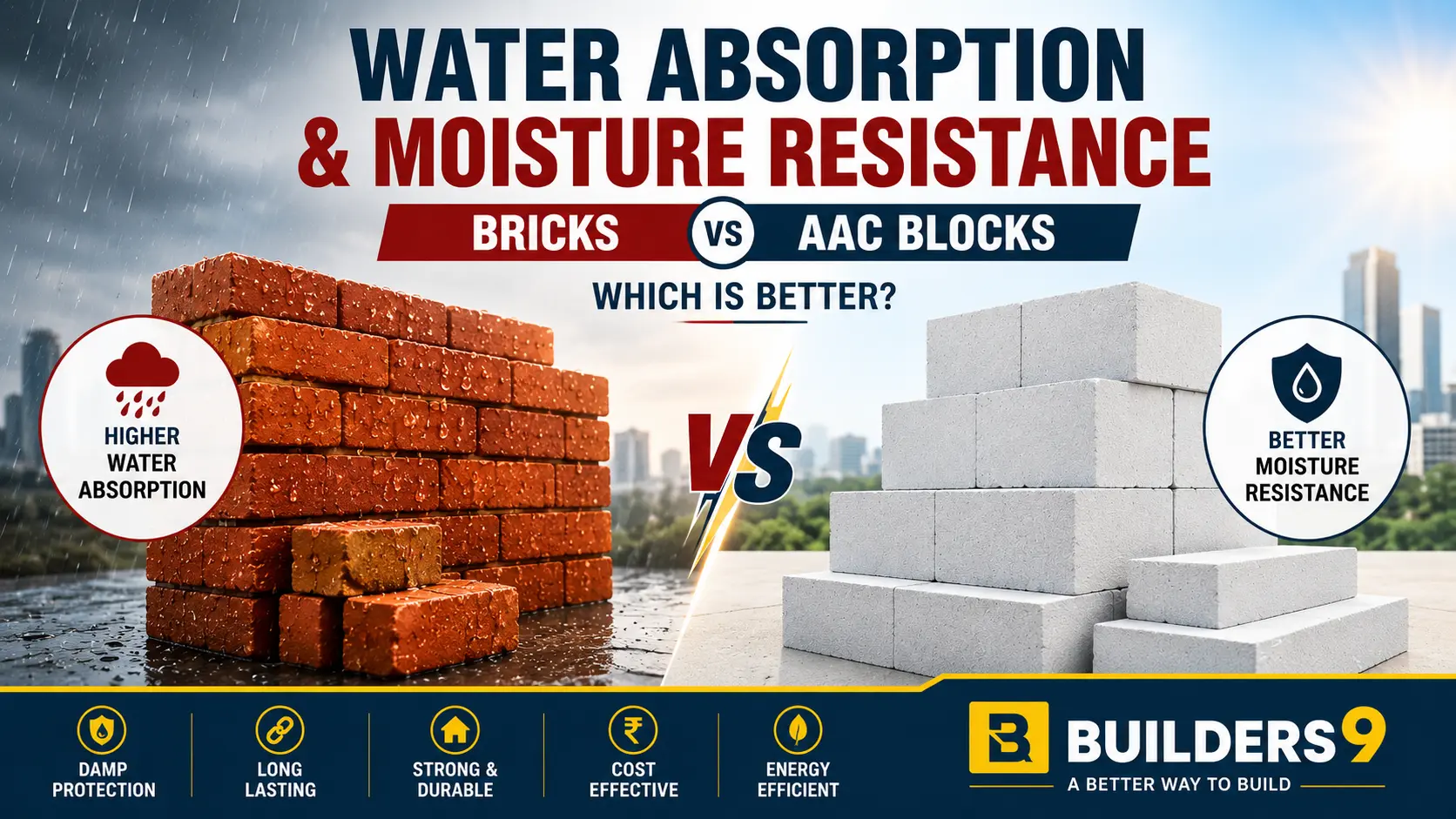
When planning a construction project, most homeowners and builders focus on factors like strength, cost, and appearance. However, one critical aspect that is often overlooked is water absorption and moisture resistance. These properties play a significant role in determining the durability, safety, and lifespan of any building.
Walls constantly face environmental challenges, including rain, humidity, groundwater, and temperature changes. If the building material absorbs excessive moisture, it can lead to damp walls, cracks, mold growth, peeling paint, and even structural damage over time. Choosing materials with the right balance of water absorption and moisture resistance is essential for creating a comfortable and long-lasting home.
Whether you’re building a villa, apartment, commercial building, or independent house, understanding how traditional clay bricks and AAC (Autoclaved Aerated Concrete) blocks perform against moisture can help you make an informed decision.
Understanding Water Absorption in Construction Materials
Water absorption refers to the amount of water a building material can absorb when exposed to moisture. Every construction material has a certain level of porosity, meaning it contains tiny pores that can absorb water.
Materials with higher water absorption may retain moisture for longer periods, while those designed with controlled porosity can manage moisture more effectively. Excessive water absorption may result in:
- Damp interior walls
- Peeling paint
- Mold and mildew formation
- Reduced thermal efficiency
- Efflorescence (white salt deposits)
- Cracks caused by repeated wetting and drying
- Increased maintenance costs
This is why water absorption should never be ignored while selecting wall materials.
Why Moisture Resistance Is Equally Important
Water absorption and moisture resistance are closely related but not identical. While water absorption measures how much water enters a material, moisture resistance refers to the material’s ability to withstand moisture without losing its performance or structural integrity.
A moisture-resistant wall material helps:
- Maintain indoor comfort
- Prevent damp patches
- Protect wall finishes
- Reduce mold growth
- Increase structural durability
- Lower maintenance costs
- Improve overall building lifespan
For regions with seasonal rains or high humidity, moisture resistance becomes an essential consideration.
Water Absorption in Traditional Clay Bricks
Traditional clay bricks have been used for centuries because of their strength and reliability. However, their water absorption depends on the quality of the clay, manufacturing process, and firing temperature.
Good-quality clay bricks are designed to maintain acceptable water absorption levels while providing excellent durability. Properly manufactured bricks, combined with quality mortar and plaster, create strong and dependable walls.
Advantages of Clay Bricks
- Proven long-term performance
- Excellent structural strength
- Reliable durability
- Suitable for residential and commercial construction
- Widely available
To achieve the best results, bricks should be sourced from trusted suppliers who maintain consistent quality standards.
Water Absorption in AAC Blocks
AAC (Autoclaved Aerated Concrete) blocks are engineered using cement, lime, sand, gypsum, water, and aluminum powder. During manufacturing, millions of microscopic air pockets are formed inside each block.
These air pockets make AAC blocks lightweight while providing excellent thermal insulation and sound insulation. Because AAC blocks have a cellular structure, they interact with moisture differently than traditional bricks.
When installed correctly using recommended adhesives, proper plastering systems, and protective finishes, AAC block walls deliver reliable long-term performance in residential and commercial buildings.
Proper installation practices are the key to maximizing their durability and moisture resistance.
Bricks vs AAC Blocks: Water Absorption Comparison
Both bricks and AAC blocks can perform exceptionally well when quality materials and proper construction techniques are used.
Clay Bricks
- Strong and durable
- Long history of successful use
- Suitable for load-bearing structures
- Perform well with quality plaster and waterproofing
AAC Blocks
- Lightweight
- Uniform manufacturing quality
- Excellent dimensional accuracy
- Modern construction solution
- Compatible with advanced waterproofing systems
Rather than asking which material absorbs less water, builders should focus on the complete wall system, including mortar, plaster, waterproofing, workmanship, and maintenance.
The Importance of Proper Waterproofing
Even the best wall material cannot deliver optimal performance without proper waterproofing.
A comprehensive waterproofing system includes:
- Quality cement plaster
- Waterproofing compounds
- Exterior weather-resistant coatings
- Proper roof drainage
- Damp-proof courses
- Sealed expansion joints
These measures significantly improve the building’s resistance to moisture, regardless of whether bricks or AAC blocks are used.
How Moisture Affects Building Performance
Ignoring moisture control can lead to several problems over time.
Damp Walls
Moisture trapped inside walls often appears as dark patches, discoloration, or peeling paint.
Mold and Mildew
Persistent dampness creates ideal conditions for fungal growth, which can affect indoor air quality and require frequent cleaning.
Paint Damage
Excess moisture can cause paint to blister, crack, or peel, reducing the visual appeal of interiors and exteriors.
Structural Concerns
Repeated cycles of moisture absorption and drying may contribute to surface deterioration if walls are not adequately protected.
Increased Maintenance
Buildings with poor moisture management often require more frequent repairs, repainting, and waterproofing treatments.
Dampness Protection Starts with Quality Materials
High-quality building materials are the first step toward protecting a structure from moisture-related issues.
Builders and homeowners should consider:
- Certified construction materials
- Uniform product quality
- Proper curing practices
- Skilled workmanship
- Professional installation
- Reliable waterproofing products
Combining quality materials with proper construction techniques ensures long-lasting wall performance.
Best Practices for Improving Moisture Resistance
Regardless of whether you choose bricks or AAC blocks, these practices help improve durability.
Use High-Quality Mortar
Proper mortar bonding reduces gaps where moisture can penetrate.
Apply Professional Plaster
Well-executed plaster provides an effective protective layer against weather exposure.
Install Waterproof Coatings
Exterior waterproof paints and coatings act as the first line of defense during heavy rains.
Ensure Proper Drainage
Rainwater should always flow away from walls through properly designed roofs, gutters, and site drainage.
Seal Openings
Windows, doors, plumbing penetrations, and electrical openings should be carefully sealed to prevent water ingress.
Regular Maintenance
Periodic inspection and timely repairs help prevent small moisture problems from becoming major structural concerns.
Long-Term Durability Depends on More Than Just the Material
The lifespan of a building is influenced by several factors, including:
- Material quality
- Structural design
- Construction workmanship
- Waterproofing systems
- Environmental conditions
- Regular maintenance
Both bricks and AAC blocks can provide decades of reliable performance when these factors are properly managed.
Modern construction increasingly focuses on selecting materials that balance strength, energy efficiency, durability, and ease of installation.
Choosing the Right Material for Your Project
There is no universal answer to whether bricks or AAC blocks are always better. Each material offers unique advantages depending on the project requirements.
Traditional bricks remain a trusted choice for many residential and commercial applications because of their proven performance and durability.
AAC blocks are widely preferred in modern construction for their lightweight design, dimensional accuracy, thermal insulation, and faster installation.
The best decision should always consider:
- Building design
- Budget
- Climate
- Structural requirements
- Energy efficiency goals
- Contractor expertise
Consulting experienced construction professionals helps ensure the most suitable material is selected for your project.
Why Builders9 Is Your Trusted Construction Partner
At Builders9, we understand that every construction project has unique requirements. That’s why we supply premium-quality construction materials sourced from trusted manufacturers.
Our product range includes:
- Premium Cement
- TMT Bars
- Clay Bricks
- AAC Blocks
- Sand
- Aggregates
- Tiles
- Paints
- Plumbing Materials
- Electrical Materials
With competitive pricing, expert guidance, and fast delivery across Hyderabad, Builders9 helps homeowners, contractors, architects, and builders choose materials that deliver long-term performance.
Frequently Asked Questions
Do AAC blocks absorb water?
AAC blocks have a cellular structure and should always be installed with the recommended adhesives, plaster, and waterproofing systems for optimal performance.
Are clay bricks moisture resistant?
Quality clay bricks, when combined with proper construction practices and waterproofing, provide durable and reliable wall systems.
Can waterproofing eliminate dampness completely?
Proper waterproofing significantly reduces the risk of dampness, but good design, quality materials, and regular maintenance are equally important.
Which material lasts longer?
Both bricks and AAC blocks can offer excellent longevity when installed correctly and maintained properly.
Conclusion
Water absorption and moisture resistance are essential considerations when selecting wall materials for any construction project. Rather than focusing on a single property, homeowners and builders should evaluate the overall performance of the complete wall system, including material quality, waterproofing, workmanship, and maintenance.
Both traditional clay bricks and AAC blocks are trusted construction materials with proven applications. The right choice depends on your project requirements, structural design, and long-term goals.