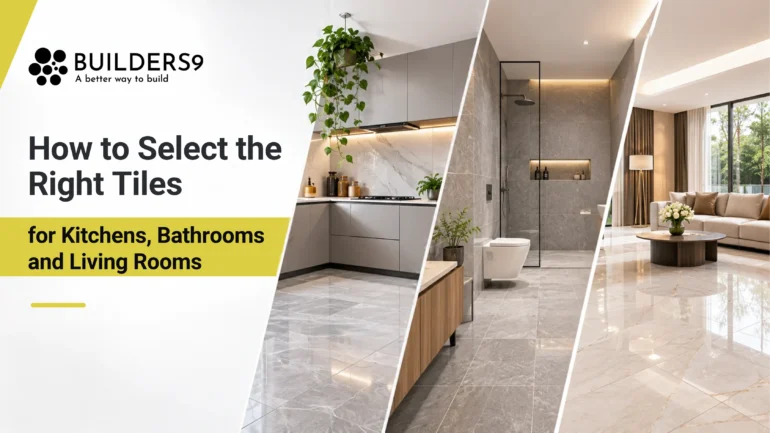
Right Tiles is an important question when planning a new home, renovating an existing space or choosing finishes for a construction project. Tiles influence more than the appearance of a room. The right choice can make everyday cleaning easier, help provide a suitable level of grip, suit the way a room is used and complement the overall design. A tile that looks attractive in a showroom may not be the best option for a wet bathroom floor or a busy kitchen.
The best approach is to choose tiles room by room instead of selecting one design for the entire house without considering how each space functions. Kitchens need surfaces that are practical to clean and suitable for spills. Bathrooms need careful attention to wet-floor safety and water exposure. Living rooms offer more flexibility, but durability, comfort, maintenance and design still matter.
This guide explains the key tile types, finishes, sizes and selection factors to consider for kitchens, bathrooms and living rooms. It also includes practical questions to ask before buying, installation considerations and common mistakes to avoid.
1. Understand the Main Types of Right Tiles.
Start by understanding the tile material and its intended application. Product names can vary between manufacturers, so check the technical details and recommended use rather than relying only on the display label.
Ceramic tiles
Ceramic tiles are commonly used on walls and floors in residential spaces. They are available in many colours, patterns and sizes. Their suitability depends on the product’s body, finish, water absorption characteristics and whether the manufacturer recommends it for the intended floor or wall application.
Vitrified tiles
Vitrified tiles are manufactured to have low water absorption compared with many conventional ceramic products. They are available in a wide range of finishes and designs and are often considered for living rooms, kitchens and other high-use areas. Confirm the tile’s technical specifications, surface finish and application guidance before choosing.
Porcelain tiles
Porcelain tiles are a type of ceramic tile made using refined materials and fired under controlled conditions. They are generally known for low water absorption and are available in multiple finishes. Not every porcelain tile is automatically suitable for every wet or outdoor application; check the manufacturer’s rating and installation instructions.
Natural stone tiles
Natural stone options such as granite, marble and slate offer distinctive patterns and textures. Their maintenance requirements differ by stone type. Some stones may need sealing and careful cleaning products. Ask about porosity, stain resistance, sealing frequency and suitability for the intended room.
Mosaic tiles
Mosaic tiles are small-format pieces supplied on sheets or in individual units. They can be useful for decorative details, shower floors and curved surfaces. More grout joints mean more areas to clean, so choose grout and maintenance methods carefully.
2. How to Select Tiles for the Kitchen
A kitchen is a working space exposed to food spills, water, grease, frequent movement and regular cleaning. Choose tiles based on the exact location: floor, backsplash or countertop wall.
Kitchen floor tiles
For kitchen floors, look for a durable tile with a surface that provides suitable grip for the expected conditions. A highly polished surface can become slippery when wet or greasy. Ask the supplier for the product’s slip-resistance information and whether it is recommended for kitchen floors. Also consider how easily the surface can be cleaned and whether it shows stains or dust.
Kitchen wall and backsplash tiles
The wall behind a hob, sink or preparation counter can be exposed to splashes and cooking residue. A smooth, easy-to-clean glazed tile is often practical for a backsplash. Choose a grout colour and joint width that suit the design and cleaning routine. Ensure the material and installation system are appropriate for the heat and moisture conditions near appliances.
Kitchen tile size and colour
Larger floor tiles can create a more continuous look with fewer grout joints, but the floor must be sufficiently level and the tile must be installed correctly. Medium and smaller tiles can work well in compact kitchens or where falls and levels need careful detailing. Light colours can make a small kitchen feel brighter, while mid-tone or patterned finishes may be more forgiving of everyday marks.
Kitchen checklist
Confirm that the tile is rated or recommended for the intended floor or wall use.
Ask for slip-resistance information for floor tiles.
Consider resistance to stains and the cleaning products you normally use.
Check tile thickness, size consistency, shade and batch availability.
Choose grout suitable for the location and expected cleaning routine.
3. How to Select Tiles for the Bathroom
Bathrooms need more careful tile selection because floors and walls are exposed to water, soap, shampoo and cleaning products. A beautiful tile is not enough if the floor becomes slippery when wet.
Bathroom floor tiles and grip
Prioritise slip resistance for bathroom floors, especially inside shower areas and near bathing zones. Textured or matte surfaces may provide better grip than polished surfaces, but appearance alone cannot confirm performance. Request the manufacturer’s test data or classification for wet-area use and follow local project specifications. If the bathroom is used by older adults or people with mobility limitations, discuss the flooring choice with the designer or relevant professional.
Bathroom wall tiles
Wall tiles can be selected more freely for colour, pattern and finish because they are not walked on. Glazed ceramic or porcelain tiles are common options. Choose a surface that is practical to wipe down and make sure the tile, adhesive and grout system are suitable for the wet environment.
Shower area and drainage
The shower floor needs a properly designed slope towards the drain. Smaller tiles or mosaics can sometimes make it easier to form slopes because they have more joints, but the final choice depends on the tile, layout and installer. Correct waterproofing below the tile finish is essential; tiles and grout alone should not be treated as the waterproofing system.
Bathroom tile colours and sizes
Light shades can make a compact bathroom feel more open, while darker shades can create contrast. Very dark or highly polished surfaces may show water marks, soap residue or dust more clearly. Large-format tiles can reduce grout joints on walls, but they require suitable substrate preparation and skilled installation.
Bathroom checklist
Choose a floor tile with documented suitability for wet areas.
Do not select a bathroom floor tile based only on its appearance.
Confirm waterproofing, slope and drainage details before tiling.
Use suitable tile adhesive and grout for the wet-area application.
Plan access panels, floor traps and junction details before installation.
4. How to Select Tiles for the Living Room
Living rooms are often among the largest visible spaces in a home. Tiles can influence the room’s brightness, sense of space and overall style. At the same time, the floor may experience regular foot traffic, furniture movement and dust brought in from outdoors.
Durability and surface finish
Choose a floor tile intended for the expected level of residential traffic. Consider scratch visibility, stain resistance, ease of cleaning and the possibility of furniture being moved across the surface. Polished tiles can create a reflective, formal look, while matte or textured finishes can create a softer appearance. Match the finish to household needs, not just current trends.
Tile size and room proportions
Large-format tiles can make a spacious living room feel seamless, especially when the layout is planned to minimise narrow cuts. In smaller rooms, tile size should be selected after checking room dimensions, door positions and furniture layout. A larger tile does not automatically make every small room look bigger; proportion, grout lines, colour and lighting all affect the result.
Colour, pattern and interior design
Neutral shades such as beige, grey and warm white can work with many furniture styles. Wood-look tiles can add visual warmth, while stone-look or subtle patterned tiles can create a more distinctive floor. Request a physical sample and view it in the room’s natural and artificial lighting before making a final decision.
Living room checklist
Select a tile intended for floor use and suitable for expected foot traffic.
Compare samples under the room’s actual lighting.
Check how the finish shows dust, scratches and footprints.
Plan tile direction, skirting, thresholds and movement joints.
Buy sufficient material from the same batch, including a reasonable allowance for cuts and future repairs.
5. How to Choose the Right Tile Size
Tile size affects the visual appearance, number of grout joints, cutting waste and installation effort. Common formats include small mosaics, medium square tiles, rectangular formats and large-format slabs. There is no single best size for every room.
Before choosing a size, measure the room accurately and prepare a tile layout. A layout helps identify narrow edge cuts, awkward joints and alignment issues around doors, drains and cabinets. Large tiles need a flat, properly prepared base and careful handling. Smaller tiles may create more grout joints, which can increase cleaning requirements.
Ask the installer to show the proposed layout before work begins. Confirm the finished floor levels at doorways and transitions between rooms, particularly where different tile thicknesses are being used.
6. Matte, Glossy or Textured Finish Which One Should You Choose
Glossy tiles reflect light and can create a bright, polished appearance. They are often considered for walls and selected living spaces, but polished floors may become slippery when wet and can show smudges or footprints. Matte tiles have a softer appearance and may be easier to live with in some busy areas, although their texture can affect cleaning. Textured tiles can offer additional grip, but deep textures may collect dirt.
Do not assume that matte always means slip-resistant or that textured always means safe. Ask for the manufacturer’s test information and choose a finish suited to the actual conditions of the room.
7. Understand Tile Quality Before Buying
Look beyond colour and design. Ask the supplier for the product data sheet, intended application, water absorption information where relevant, surface characteristics, recommended installation method and care instructions. For floor tiles, ask about the applicable slip-resistance test or classification. For areas exposed to stains or chemicals, confirm the relevant resistance information.
Inspect samples for visible cracks, chipped edges, surface defects and shade variation. Check whether all cartons belong to the same batch or shade code. Differences between batches can be noticeable after installation. Also confirm the quantity per box, coverage area, thickness and whether the product is suitable for the intended indoor or outdoor use.
8. Tile Adhesive, Grout and Installation Matter
Even a good tile can perform poorly if it is installed on an unsuitable base or with the wrong fixing materials. The substrate should be properly prepared, clean and sufficiently level. Use an adhesive recommended for the tile type, size, substrate and location. Large-format tiles, natural stone and wet areas may require specific products and installation techniques.
Grout fills the joints between tiles and helps complete the tiled surface. Choose a grout suitable for the joint width and exposure conditions. Follow the manufacturer’s mixing, application and curing instructions. Movement joints and perimeter gaps should be planned where required; rigidly filling every joint can contribute to cracking or debonding when the assembly moves.
In bathrooms and other wet areas, waterproofing must be designed and installed as a separate system beneath the tile finish. A tile surface is not a substitute for correctly executed waterproofing.
9. Common Tile-Buying Mistakes to Avoid
Choosing tiles only because they look attractive in a showroom.
Using polished tiles on wet floors without checking slip performance.
Selecting wall tiles for floor use without confirming suitability.
Ignoring shade and batch differences between cartons.
Ordering too little material and later finding that the same batch is unavailable.
Choosing a tile size without preparing a room layout.
Overlooking adhesive, grout, skirting, trims and installation costs.
Assuming tiles and grout alone will waterproof a bathroom.
Using harsh cleaning chemicals that may damage the tile, grout or stone.
Not keeping spare tiles for future repairs.
10. How Many Tiles Should You Buy
Start by calculating the area to be covered. For a rectangular room, multiply the length by the width using the same unit of measurement. Add the areas of separate sections and subtract openings only where appropriate. Divide the total area by the coverage stated on each box to estimate the number of boxes.
A cutting and wastage allowance is normally added, but the correct percentage depends on the room shape, tile size, pattern, diagonal layout, installer and product. Ask the tile supplier or installer to calculate the quantity from the final layout. Keep a few spare tiles from the same batch for future repairs.
Simple example
If a room measures 4 metres by 5 metres, its basic floor area is 4 × 5 = 20 square metres. If the selected tile carton covers 1.44 square metres, the basic carton estimate is 20 ÷ 1.44 = 13.89, so at least 14 cartons are needed before adding the project-specific cutting and wastage allowance. Confirm the final quantity with the installer and carton coverage printed by the manufacturer.
11. Questions to Ask Before Finalising Your Tiles
Is this tile approved or recommended for the room and surface where I plan to use it?
What are its slip-resistance details for the intended floor conditions?
What are the tile’s dimensions, thickness, coverage per box and shade or batch code?
What adhesive and grout does the manufacturer recommend?
How should the tile be cleaned and maintained?
Is the same batch available for the full quantity and a few spare tiles?
What is included in the quotation: tiles, adhesive, grout, trims, transport and installation?
12. Final Room-by-Room Tile Selection Summary
| Room | Main priority | Finish to consider | Important check |
| Kitchen floor | Cleanability and suitable grip | Matte or suitable textured finish | Slip and stain performance |
| Kitchen backsplash | Easy cleaning | Smooth glazed finish | Heat and splash suitability |
| Bathroom floor | Wet-area safety | Suitable textured or matte finish | Documented wet slip performance |
| Bathroom walls | Moisture and easy cleaning | Glazed ceramic or porcelain | Wet-area installation system |
| Living room | Durability and appearance | Polished, matte or wood-look | Traffic, scratches and maintenance |
Frequently Asked Questions
Which tiles are best for a kitchen floor?
Choose a floor-rated tile that is practical to clean and provides suitable grip for the kitchen’s expected conditions. Check the manufacturer’s slip-resistance information rather than judging by appearance alone.
Which tiles are safest for bathroom floors?
Look for tiles specifically recommended for wet floors and request documented slip-resistance information. Also ensure that the floor has correct slope, drainage and waterproofing.
Are glossy tiles suitable for living rooms?
They can be suitable in some living rooms, depending on household needs and the product’s intended use. Consider glare, footprints, scratches and slip conditions before choosing.
Are large tiles better than small tiles?
Not always. Large tiles can reduce grout joints and create a continuous look, but they need a suitable flat base and careful installation. Smaller tiles can suit compact areas, patterns and sloped shower floors.
What is the difference between ceramic and vitrified tiles?
They differ in composition and manufacturing characteristics, including water absorption. Compare the product’s technical specifications and recommended application instead of relying only on the category name.
Do bathroom tiles make the bathroom waterproof?
No. Tiles and grout are the visible finish. A properly designed and installed waterproofing system beneath them is essential in wet areas.
How much extra tile should I buy?
The allowance depends on room shape, tile size, pattern, cuts and installation method. Ask the supplier or installer to calculate it from the final layout and retain spare tiles from the same batch.
Can the same tile be used in every room?
Some tiles may be suitable for multiple rooms, but each application has different needs. Check floor or wall suitability, slip performance, moisture exposure and maintenance requirements for each space.
Conclusion
Selecting tiles is about finding the right balance between design, performance, safety and maintenance. Kitchen tiles should suit spills and regular cleaning, bathroom tiles need particular attention to wet-floor grip and waterproofing, and living room tiles should complement the space while standing up to daily use. Compare product specifications, inspect samples, plan the layout and choose suitable installation materials before placing your order.
Builders9 brings construction material requirements together in one place. Explore the available building materials and discuss your project needs with the Builders9 team.

Buying guides, material price updates and building tips from the Builders9 team.