
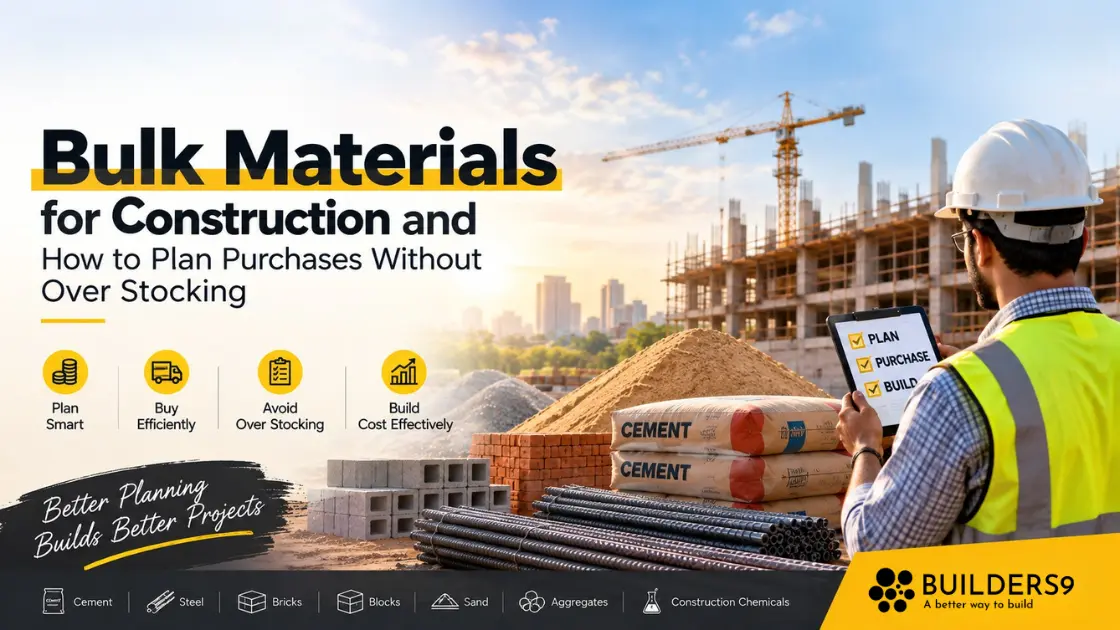
Bulk materials for construction, buying can help a project maintain a steady supply, reduce repeated purchasing work and improve cost planning. However, ordering too much material too early can create storage problems, damage, cash-flow pressure and unnecessary waste. The right approach is not simply to buy more—it is to buy the right quantity at the right time.
Whether you are constructing a home, apartment, commercial building or renovation project, a clear material procurement plan can make the entire process more organised. This guide explains how to plan bulk construction materials purchases without over-stocking.
Why Bulk Materials for Construction Planning Matters
Construction involves several materials, including cement, TMT steel, bricks, AAC blocks, sand, aggregates, tiles, plumbing products and electrical items. Each material has different storage needs, purchase cycles and usage patterns. Without proper planning, materials may arrive before the site is ready for them or remain unused for long periods.
A planned bulk purchase can help you maintain material availability, reduce repeated purchases, negotiate suitable rates, coordinate deliveries and control waste.
1. Understand Your Construction Schedule
Before placing a bulk order, review the construction schedule with your engineer, contractor or site supervisor. Materials should be purchased according to the stage of work rather than only according to the total project requirement.
Foundation work may require cement, steel, sand and aggregates first, while bricks, AAC blocks, plastering materials, tiles, paints, plumbing products and electrical items may be needed at later stages. A stage-wise plan helps you avoid storing materials that will not be used immediately.
2. Prepare a Material-Wise Quantity Estimate
Create a list of materials required for the project and divide it into categories. The quantity should be estimated based on the building plan, structural drawings, measurements and the advice of qualified professionals.
Keep a small, reasonable allowance for cutting, breakage and site-level variation, but avoid adding excessive quantities without a clear reason.
3. Separate Immediate Needs from Future Needs
Not every material needs to be purchased at the beginning of the project. Divide your requirements into immediate requirements, short-term requirements and future requirements.
Immediate requirements are materials needed within the next few days. Short-term requirements are materials needed during the next construction stage. Future requirements can be ordered closer to their actual usage.
4. Check Storage Conditions Before Ordering
Storage capacity should be considered before confirming a bulk order. Cement must be protected from moisture, steel should be stored safely, and bricks or blocks should be stacked without obstructing site movement.
A material may be cheaper in bulk, but the saving can disappear if it gets damaged because of poor storage. Always check whether the site has enough covered, dry and accessible space.
5. Compare Total Cost, Not Just Unit Price
A lower per-unit price is not always the lowest overall cost. When comparing suppliers, consider the material price along with delivery charges, unloading costs, transport distance, minimum order quantity, taxes, wastage and possible replacement costs.
A reliable supplier should provide clarity on the product specification, quantity, delivery schedule and final payable amount before the order is confirmed.
6. Coordinate Delivery with Site Progress
Bulk construction materials should reach the site when the workforce and construction activity are ready to use them. Early delivery can create congestion and storage pressure, while late delivery can interrupt work.
Confirm the delivery date and time, keep unloading space ready, ensure a responsible person receives the materials, check the quantity and visible condition, and maintain a simple inward-material register.
7. Inspect Materials Before Accepting Them
Before accepting a bulk delivery, verify the product name, brand, quantity, size and visible condition. Cement bags should be checked for damage and signs of moisture. Steel should match the ordered grade and size. Bricks and blocks should be checked for breakage, consistency and suitability for the intended work.
For technical quality checks, follow the recommendations of your engineer or site supervisor and refer to the relevant manufacturer information.
8. Maintain Inventory and Reorder Levels
A simple inventory sheet can help you track what was ordered, what arrived, what was used and what remains at the site. This prevents duplicate orders and helps identify upcoming requirements.
Set a reorder level for frequently used materials. When the available quantity reaches that level, place the next order based on delivery time and the construction schedule.
Common Problems Caused by Over-Stocking
Materials may get damaged due to rain, moisture, dust or improper stacking. Site space may become difficult to access. Money may remain blocked in unused inventory. Extra handling can increase labour and wastage, and unplanned stock can hide shortages in other important materials.
When Is Bulk Buying a Good Option?
Bulk buying is generally useful when the material has a predictable requirement, the supplier offers a clear rate, the site has suitable storage and the delivery schedule is dependable. It is less suitable when the project design is still changing, storage is limited or the material will not be used for a long time.
For materials with short usage cycles or specific storage requirements, phased purchasing may be safer than one large order.
Bulk Construction Materials Checklist
- Confirm the construction stage and immediate requirement.
- Prepare a material-wise quantity estimate.
- Compare brands, quality and specifications.
- Check the supplier’s bulk pricing and delivery terms.
- Confirm storage space before ordering.
- Schedule delivery according to site progress.
- Inspect quantity and condition at delivery.
- Update the inventory after every receipt and issue.
- Avoid ordering materials only because the price appears lower.
- Keep a reasonable balance between availability and storage.
How Builders9 Can Help
Builders9 helps homeowners, builders and contractors source essential construction materials from one platform. The range includes Cement, TMT Steel, Bricks, AAC Blocks, Sand, Aggregates, Tiles and other building essentials.
By planning requirements in advance, customers can compare available materials, coordinate suitable quantities and arrange delivery according to project needs. This can reduce the effort of managing multiple suppliers and make construction procurement more convenient.
Frequently Asked Questions
Is buying construction materials in bulk always cheaper? Not always. Bulk orders may offer better rates, but the final value depends on delivery charges, storage, wastage, quality and how quickly the materials will be used.
Which construction materials can be purchased in bulk? Common bulk-purchase materials include cement, TMT steel, bricks, AAC blocks, sand, aggregates, tiles and other regularly used construction products.
How can I avoid over-stocking cement? Buy cement according to the work schedule, maintain dry storage and track usage. Avoid storing more than the site can safely protect and use within a reasonable period.
Should all materials be ordered at the beginning of construction? No. Materials should be purchased in stages based on the construction schedule, storage conditions and expected usage.
How can I get better pricing for a bulk order? Share your material list and required quantities with the supplier, ask for a complete quotation and compare the total delivered cost rather than only the unit price.
Conclusion
Bulk construction materials purchases can improve cost control and material availability when they are planned carefully. The key is to match the order quantity with the construction schedule, storage capacity, cash flow and actual site requirements.
With a stage-wise procurement plan, proper inventory tracking and a reliable supplier, you can reduce delays, avoid unnecessary stock and keep your construction project moving smoothly.